Billionaires should
build more
playgrounds.

A modest proposal for people with immodest means.

Previous generations of wealth left behind libraries, parks, museums and civic landmarks.

We think this generation should leave behind some really incredible places to play.

The precedent

We've done this before.

Andrew Carnegie helped fund more than 2,500 public libraries around the world. Communities commonly provided land and committed to maintaining them. Carnegie helped build the thing.

More than a century later, many of those buildings still belong to everyday public life.

We think the model deserves another act.

This time,

add slides.

When you have extraordinary resources, build something ordinary people get to use.

A definition problem

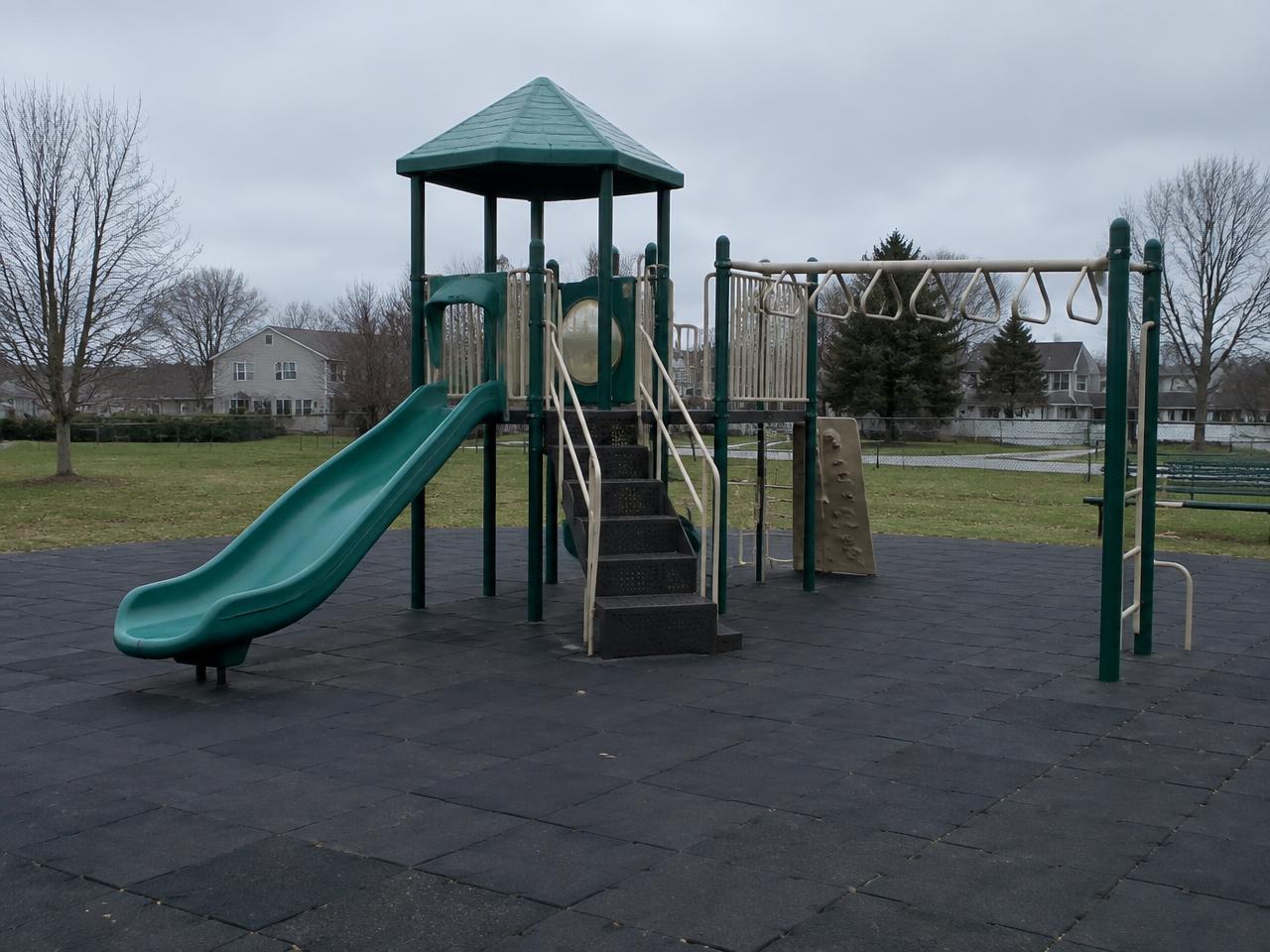
Not that kind of playground.

A plain, generic suburban play structure on a grey day

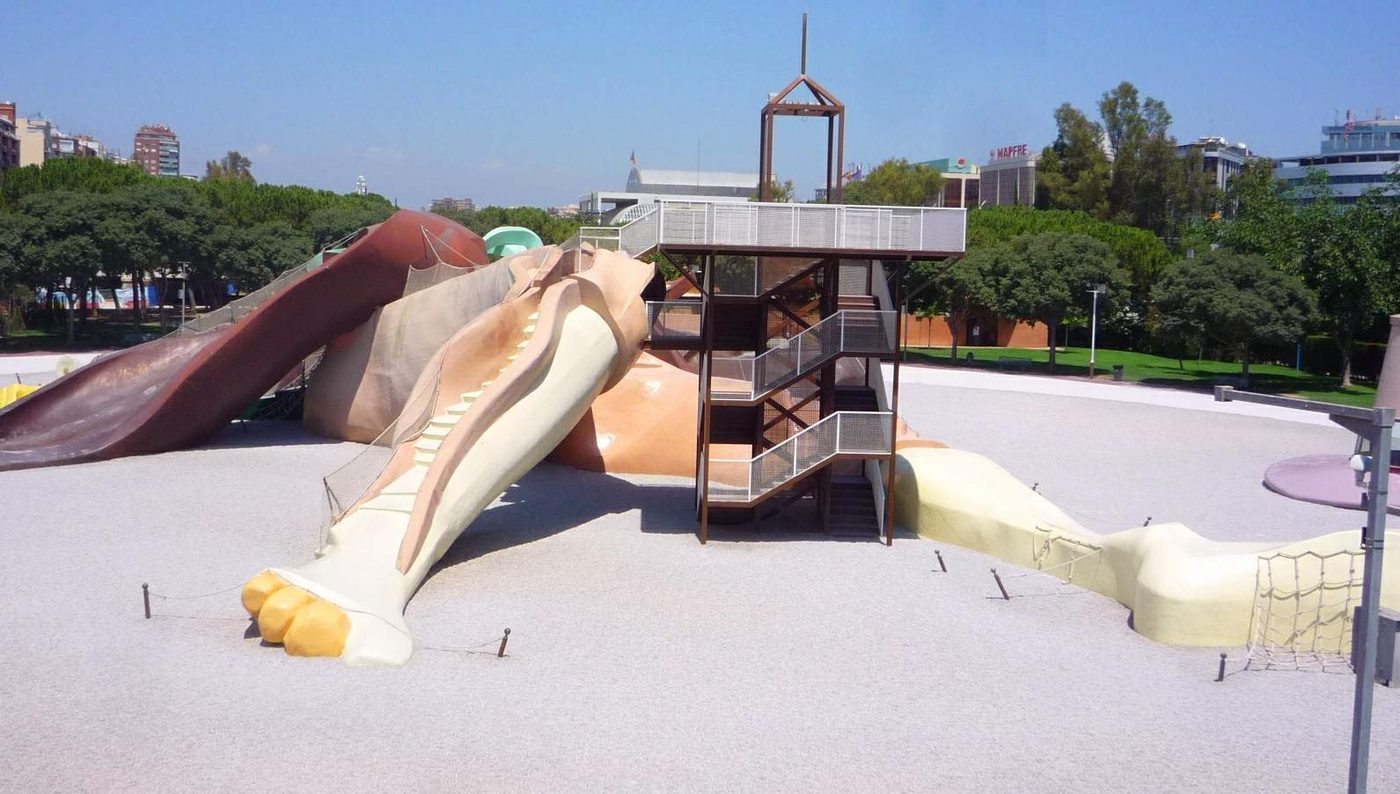
That kind.

A colossal reclining Gulliver figure whose body is a network of slides, stairs and ramps
Parque GulliverValencia, Spain · Rafael Rivera, Manuel Martín & Sento Llobell, 1990Photo: Zarateman, CC0
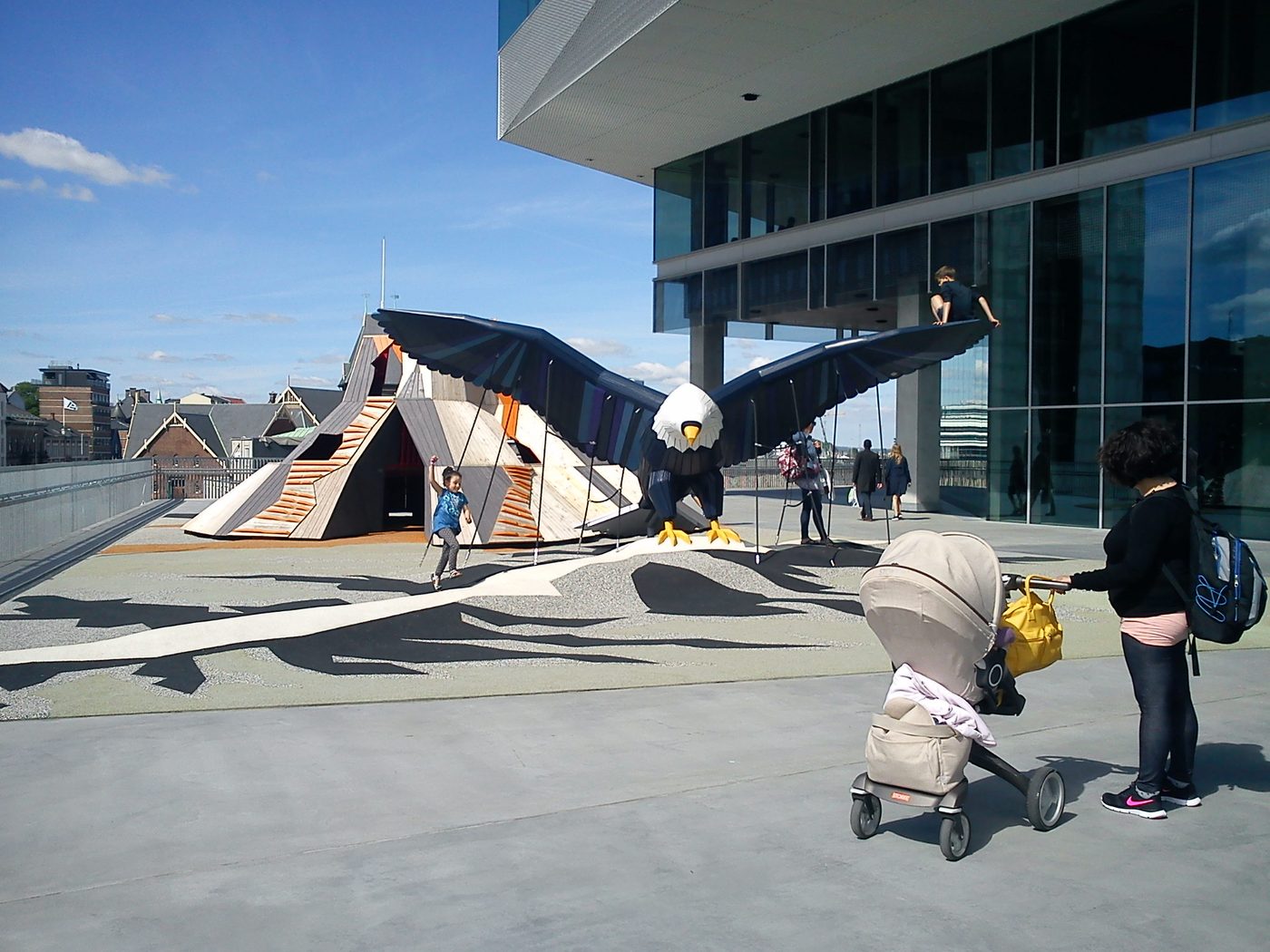
A giant timber eagle with outstretched wings beside a wooden nest structure outside a public library
Kloden at Dokk1Aarhus, Denmark · MONSTRUMPhoto: RhinoMind, CC BY-SA 4.0
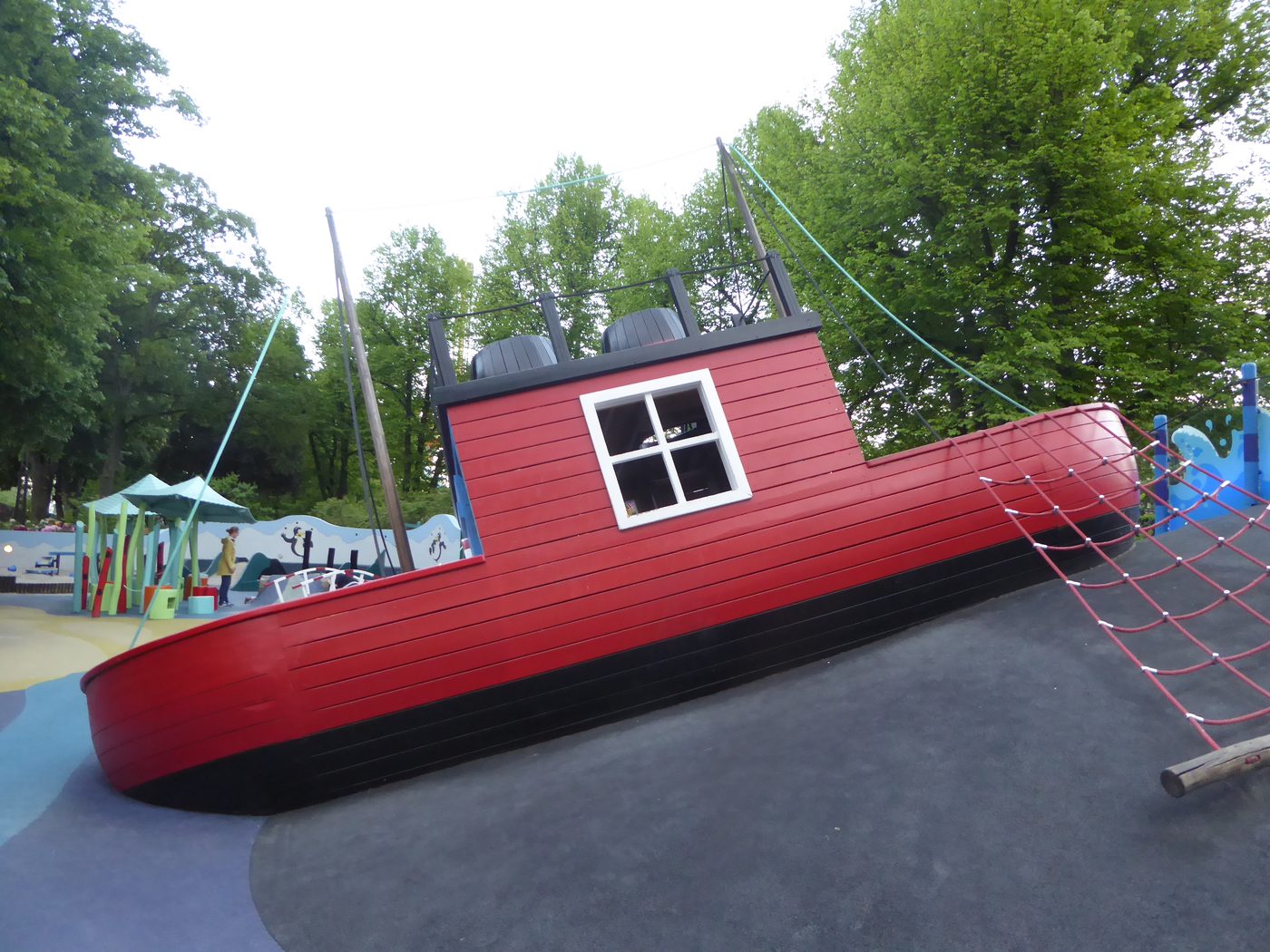
A large red wooden boat run aground as a climbing structure in a public garden
Rasmus Klumps VerdenTivoli Gardens, Copenhagen · MONSTRUMPhoto: Leif Jørgensen, CC BY-SA 4.0
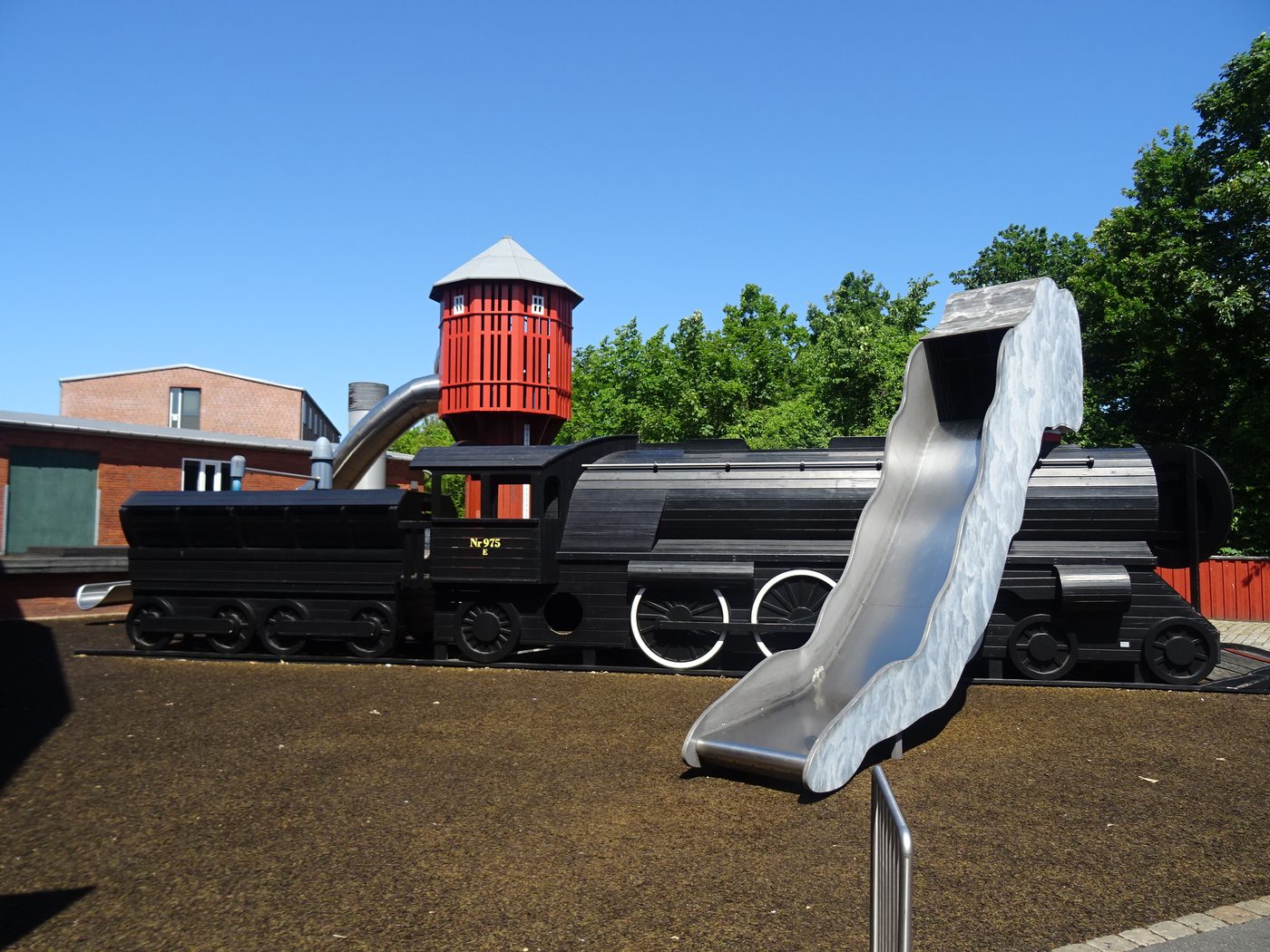
A full-size black wooden steam locomotive playground with a slide and a red water tower
Railway Museum playgroundOdense, Denmark · MONSTRUMPhoto: Leif Jørgensen, CC BY-SA 4.0

All four are real, public and already built. Yes, someone paid for them.

A playground can be a whale.

A forest.

A shipwreck.

A mountain.

A flock of enormous birds.

It can be one of the most memorable pieces of architecture in a city.

Let's stop treating playgrounds like equipment orders and start treating them like civic landmarks.

The evidence

Play is serious business.

Play isn't frivolous.
But it is allowed to be fun.

Okay. Your turn.

You have $3 million and an empty field. What are you building?

Build the playground you wish existed. Then put it in front of everybody.

Or see what everyone else built.

Explore playground dreams →
  1. Make it.
  2. Publish it.
  3. Find out who wants it.
  4. See if someone can make it real.

The marketplace

Different projects. Different missing pieces.

This one has land, a city, a builder, and no money. This one has $5 million and nowhere to put it. This one has half the money and needs one more believer. This one is completely ready to build.

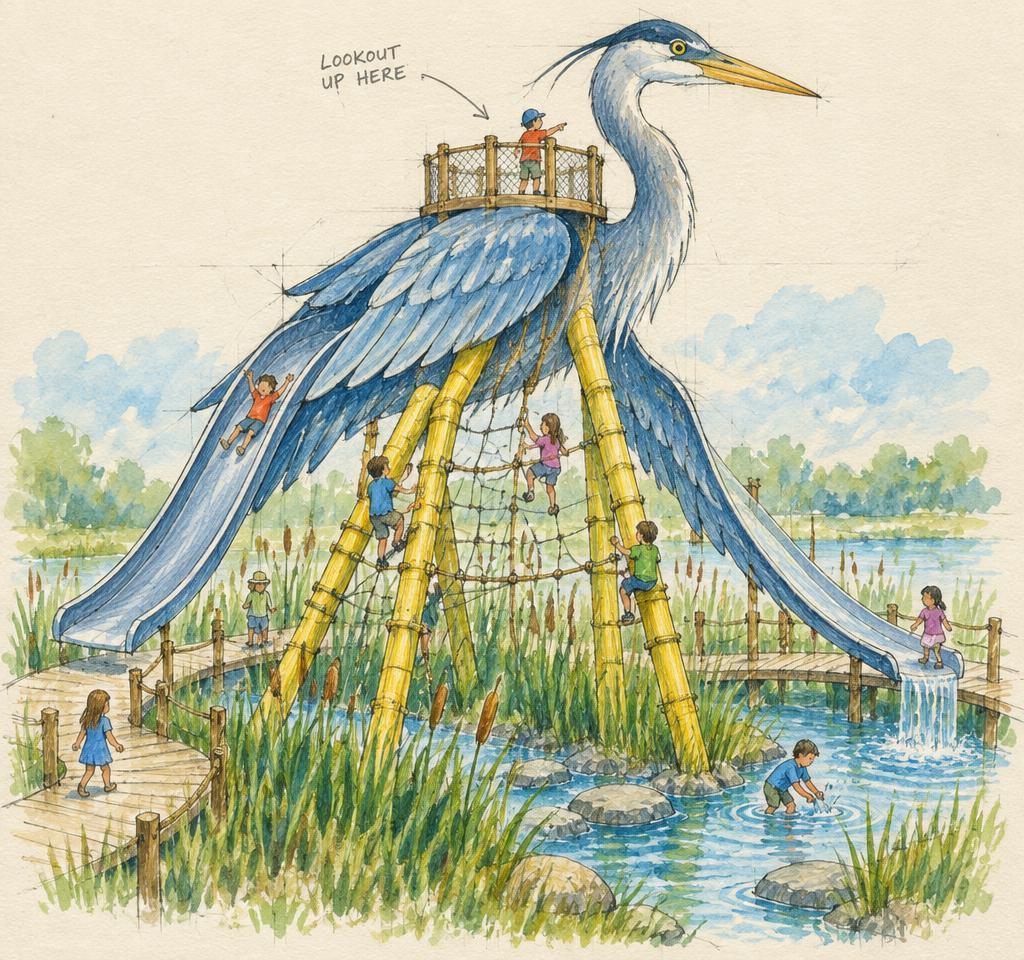
Concept sketch for Harbor Heron in Baltimore
Looking for a donorConcept example

Harbor Heron

Baltimore, Maryland

A giant Chesapeake heron rises from a wetland-inspired play landscape, with climbing nets woven through its legs, slides tucked into its wings, boardwalks, reeds, water play, and a high lookout over the park.

  • Land
  • Public partner
  • Community
  • Builder
  • Concept
  • Budget
  • Maintenance
  • Funding
Budget
$3.2M–$4.0M
Committed
None yet
Gap
$3.6M

Needs: Someone to say yes.

I could fund this
Concept sketch for The Great Oak in Dayton
Looking for a builderConcept example

The Great Oak

Dayton, Ohio

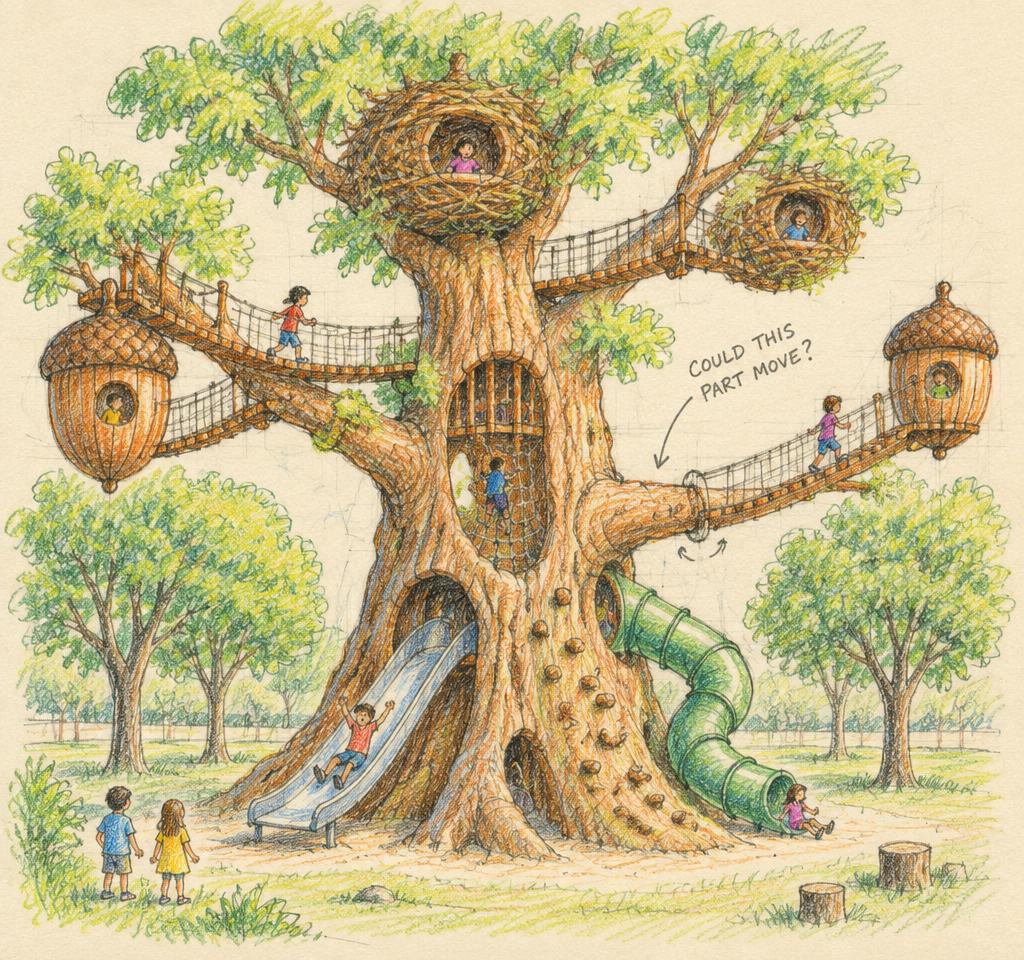
A neighborhood park already has the land, shade trees, maintenance commitment, and community backing. Now it needs someone imaginative enough to turn the place into a landmark.

  • Land
  • Public partner
  • Community
  • Builder
  • Concept
  • Budget
  • Maintenance
  • ½Funding
Budget
$2.2M–$2.8M
Committed
$750K pledged
Gap
≈ $1.8M

Needs: A builder with a big imagination.

I build playgrounds
Concept sketch for The Moonshot in City
Looking for landConcept example

The Moonshot

City, TBD

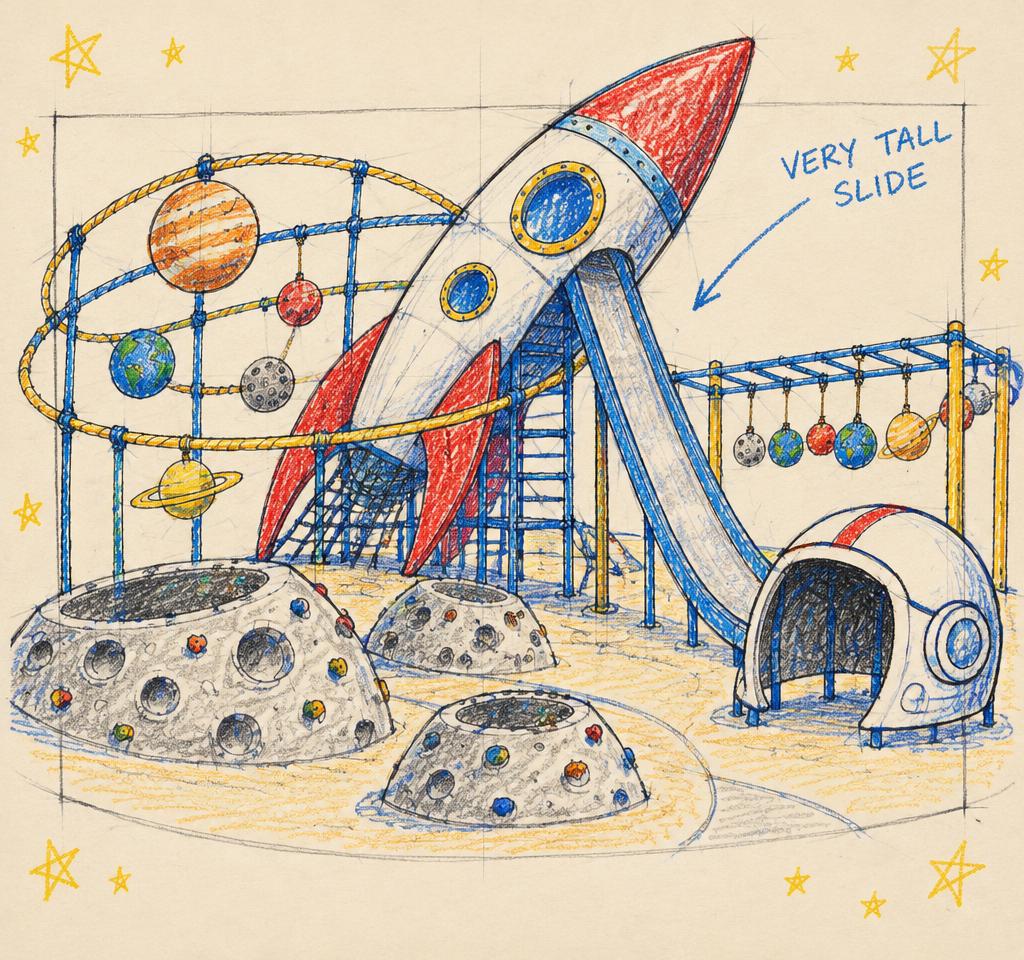
A donor is ready to fund an extraordinary space-themed playground. It just needs a city willing to give it somewhere to land.

  • Land
  • Public partner
  • Community
  • Builder
  • Concept
  • Budget
  • Maintenance
  • Funding
Budget
Up to $5M
Committed
Up to $5M reserved
Gap
Funded — needs a site

Needs: A place to land.

I have land

Build something
people remember.

Twenty-five years from now, somebody could bring their child here and say:

“I used to climb that.”